3 Questions With… Mike Dawson
I think the first time I became aware of Mike’s work was probably 2008 at the MoCCA Arts Festival. He was promoting his new book Freddie and Me. I went to that show for I think 3 years.
I’m amazed at the talented folks I came across at those shows who I still follow to this day. Pat Lewis, Chris Schweizer, Raina Telgemeier, Mike Cavallaro, Andy Runton, Mike Maihack, Mike Dawson, Lucy Knisley, Tyler Page. I’m forgetting some, I’m sure. Clearly if you’re named Mike you have a leg up in comics.
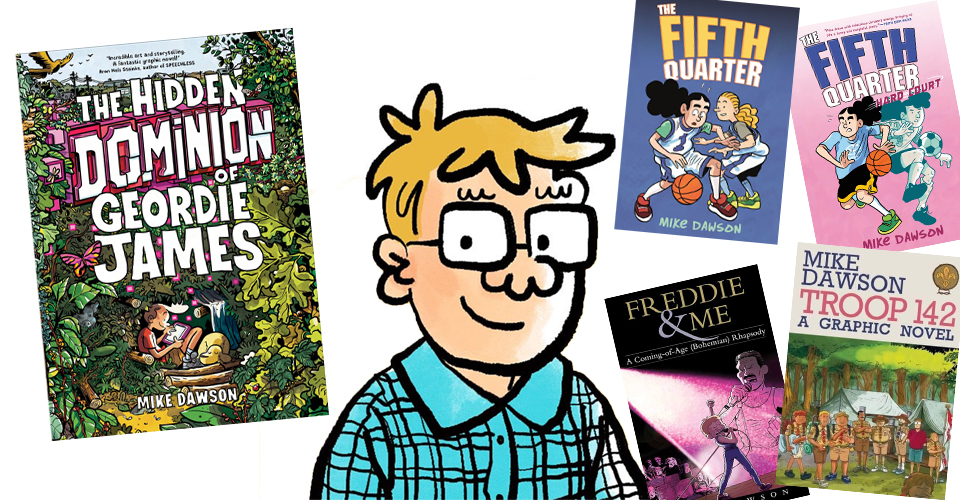
Anyway, I became a fan of Mike’s work. Ace Face, Troop 142, The Fifth Quarter (which was one of my favorite reads that year), and it’s fantastic follow up. So when I saw his new book The Hidden Dominion of Geordie James was coming out, I hit up Mike.
Why comics? (What compels you to create in this medium?)
When I was a kid I loved reading comics, and began making my own at a pretty young age. I think what initially attracted me to the art form was simply that I always liked drawing, and was very inclined to tell stories. It was just sort of a natural direction for me to head towards.
Like most cartoonists, I was always the kid who was “good at drawing”, and got lots of positive attention for that. That’s probably why I gravitated towards making comics, rather than attempting to be more of a prose writer, because I was getting that reputation in school that I liked.
I tend these days to think of cartooning as more than just marrying words and pictures, though it is basically that, but it’s also very much it’s own thing. A lot of the work I’ve done, going to schools to present assemblies and conduct cartooning workshops has helped me formulate a better understanding of how the art form works. Every line you put on paper (or the ones you don’t) impacts what information is conveyed to the reader. The quality of your line, your choices when it comes to lettering, the body language of your characters and the composition of your panels, all tell the reader something, and effect how your story is told. It is by far the art-form I am most comfortable expressing myself in.
What is something you do now that you wish you had either figured out or implemented sooner in your career?
Haha, there are a few. I wish I’d gotten my comics online earlier. I had a stupid chip on my shoulder about the validity of webcomics (something I likely just gleaned from the attitudes of critics and Comics-Journal type writers who I wanted to like me in those earlier days of online comics) that I regret constantly. I wish I’d started making quickie diary comics for Instagram years sooner. I think I’d be in a better place.
Continuing the theme of regret, I wish I’d tried to pivot to writing for younger readers earlier than I did as well. Again, I blame my brain being too soaked in the TCJ.com messageboards for having unhelpful notions of what did and did not count as “real” respectable comics, for far too long. Writing for middle-graders is amazing. You can still explore every single thing you’re interested in exploring, you just have to consider the readership a little more. That isn’t that hard to do, and has never felt like a compromise in the slightest.
Finally, I wish I’d had a better attitude about editorial input and receiving feedback sooner than I did. Again, it’s all the fault of various indie/alt comics ethos’s that I had intensely subscribed to, but I felt for a long time that an editor was somehow there to make your story into theirs somehow. Even my earlier graphic novels, I’d perceive the editorial stage as a war, where I was determined not to give up ground. It took me a long, long time to get it through my head that a (good) editor is there to help you tell your own story in the best way possible, they aren’t looking to change what you’re writing so they can claim it as their own. Apart from yourself, nobody will care about your story as much as your editor does. And, all of that aside, if you understand your own story, then it isn’t that hard to protect the parts of it necessary to maintain its integrity. I wonder if perhaps a lot of my earlier reluctance to receiving feedback was connected to my own insecurity about the things I was trying to say.
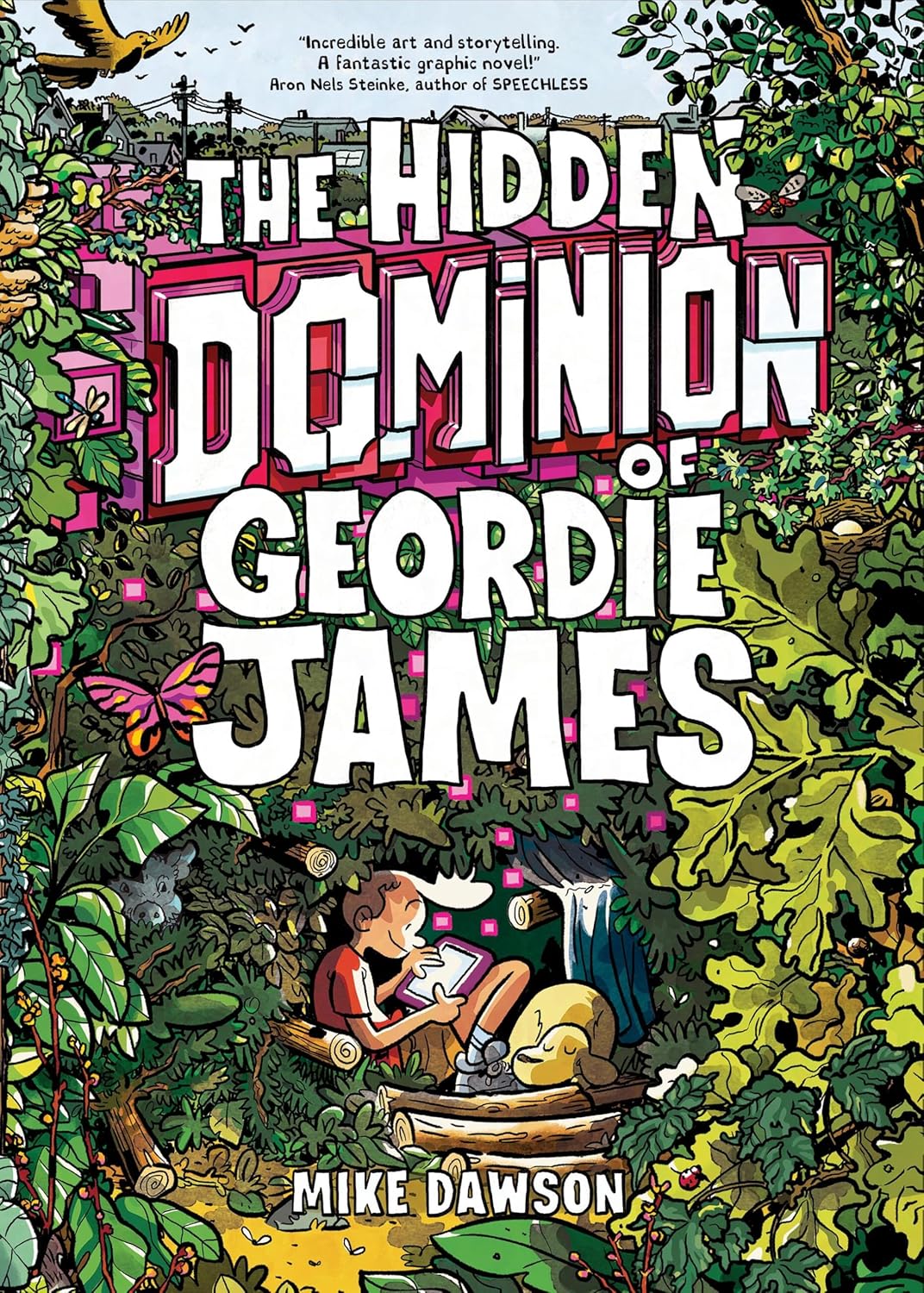
The Hidden Dominion of Geordie James 1
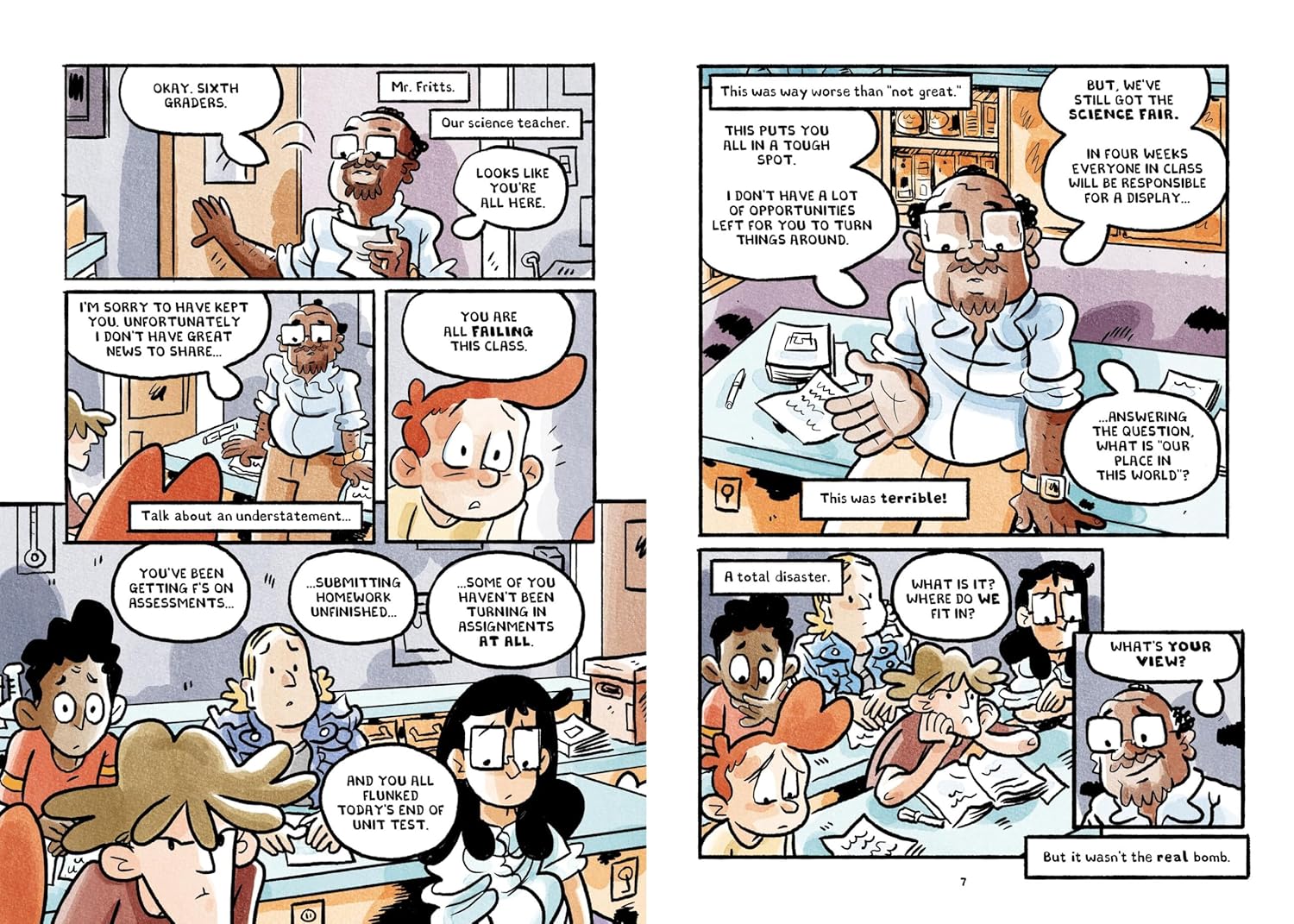
The Hidden Dominion of Geordie James 2
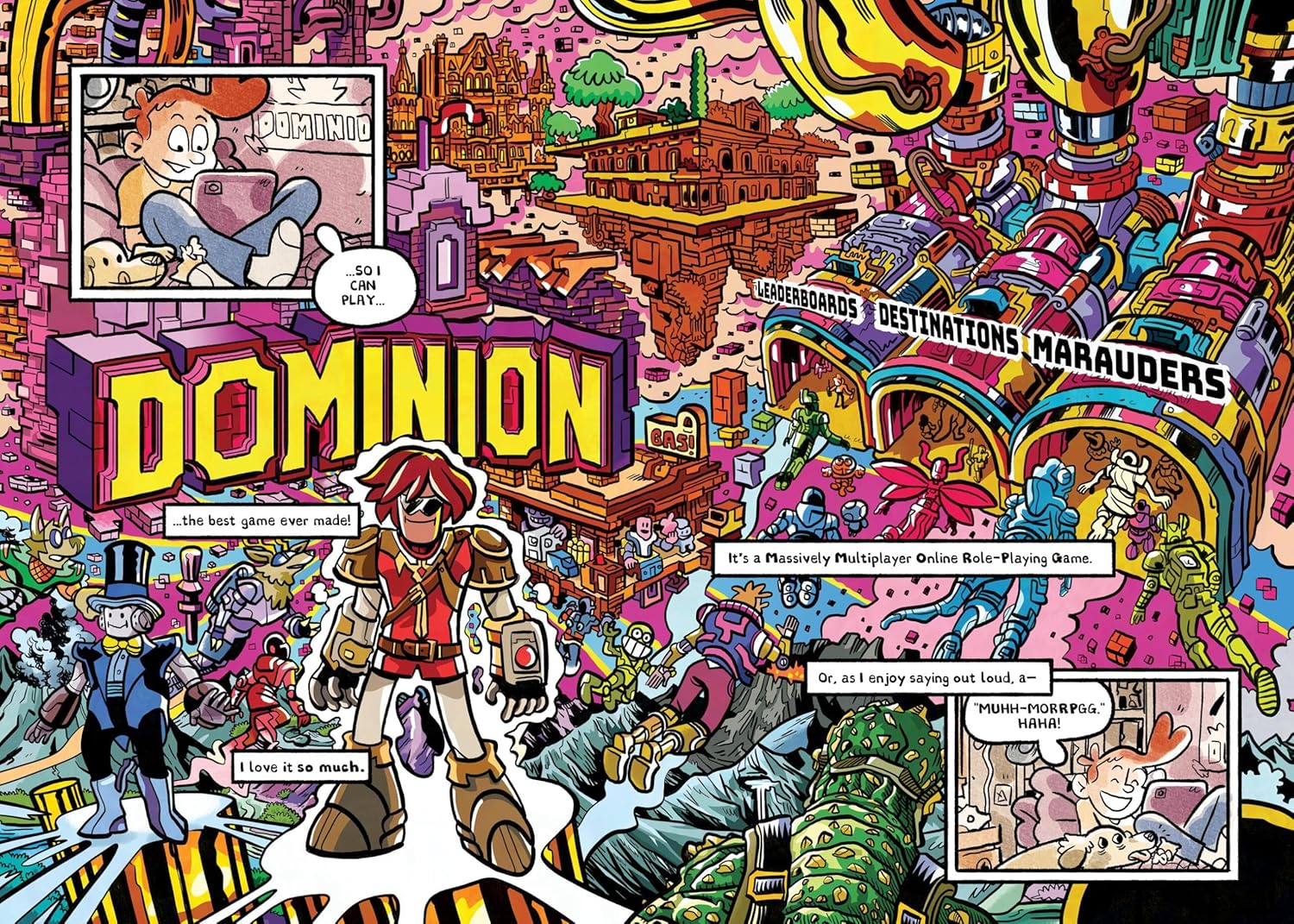
The Hidden Dominion of Geordie James 3
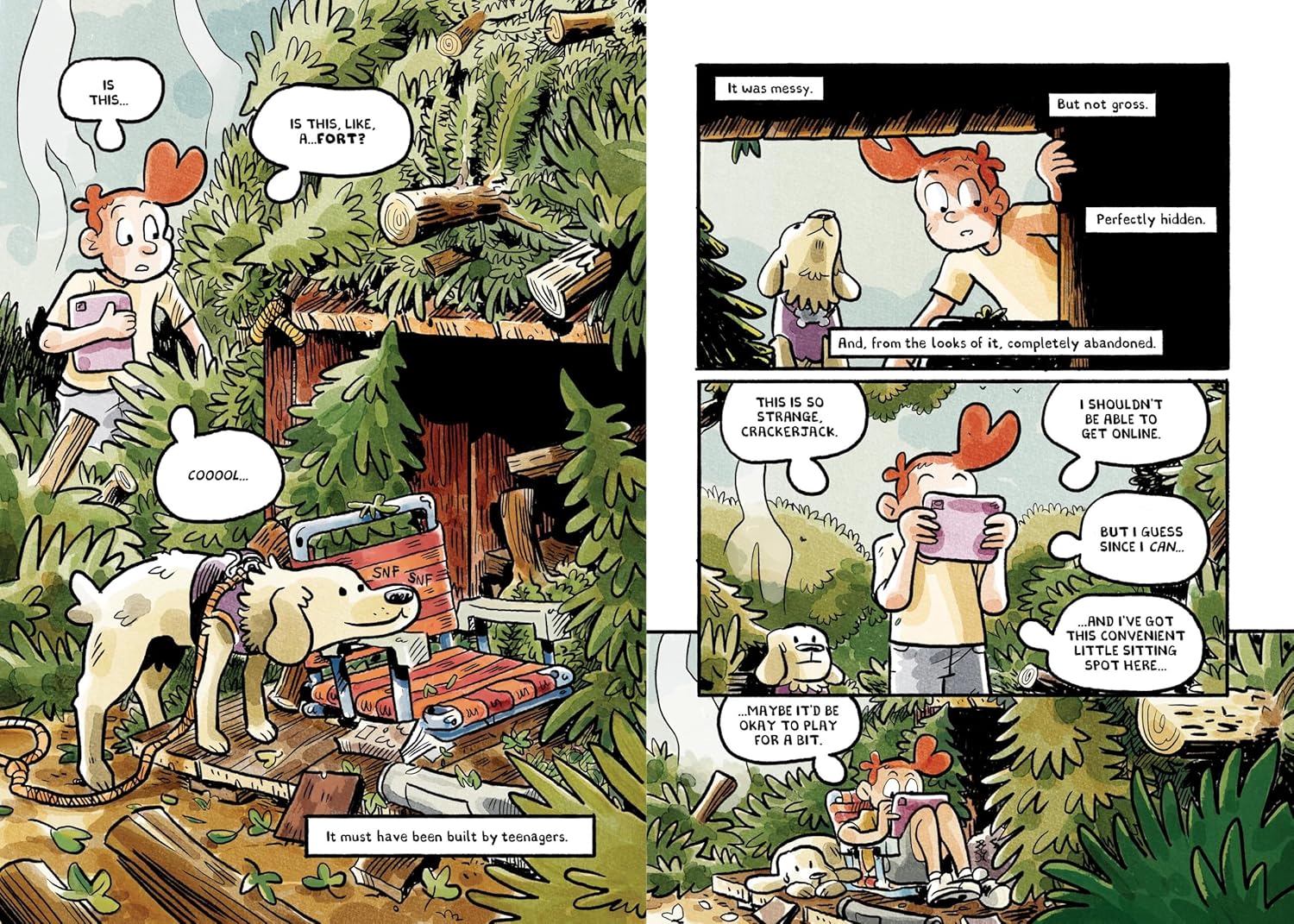
The Hidden Dominion of Geordie James 4
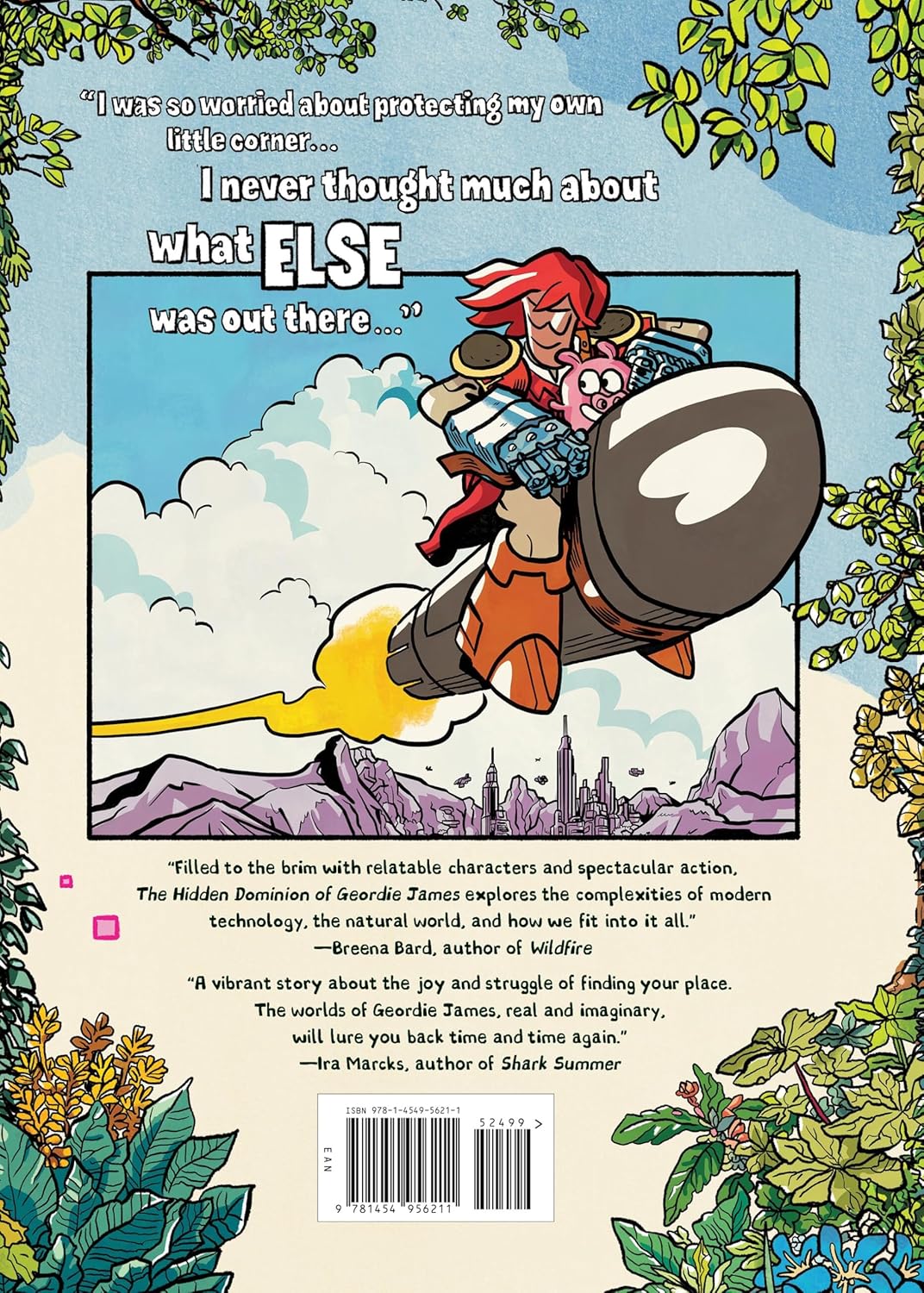
The Hidden Dominion of Geordie James 5
What is your favorite part/step of the process?
I feel lucky because I enjoy aspects of every stage in the cartooning process, though I find each of them has their own frustrations as well. Writing is the hardest part, because it’s so much harder to tell if something is coming out well or not. Also, it’s harder to quantify progress when in the writing stage. A lot of it happens in your head, and some days not a lot might make it to the page, but more was accomplished than what it could feel like. It is the hardest stage to build momentum in, but it’s also sometimes the most satisfying step. I love when it feels like a problem in a story has been solved. I often liken writing to figuring out a puzzle. It can be frustrating, but the payoff is great.
The drawing and coloring is just pure pleasure for me. It’s much easier to tell if I’m getting what I want, and I like being in that stage where I’ve just got pages to make, and time to spend making them. I have grown to love revising and editing. And I even enjoy the post-production steps as well, trying to spread the word, attempting ways to get people to look at what I’ve made. I got active on Instagram purely to expand my audience, but it turns out making quickie little diary comics to share online is rewarding and fun in it’s own right. I think the only steps I truly hate are when I don’t have an idea or any direction, and of course when I have to think too much about what making comics as a vocation has meant for me financially.
You can find Mike online at: